Vienna City Hall

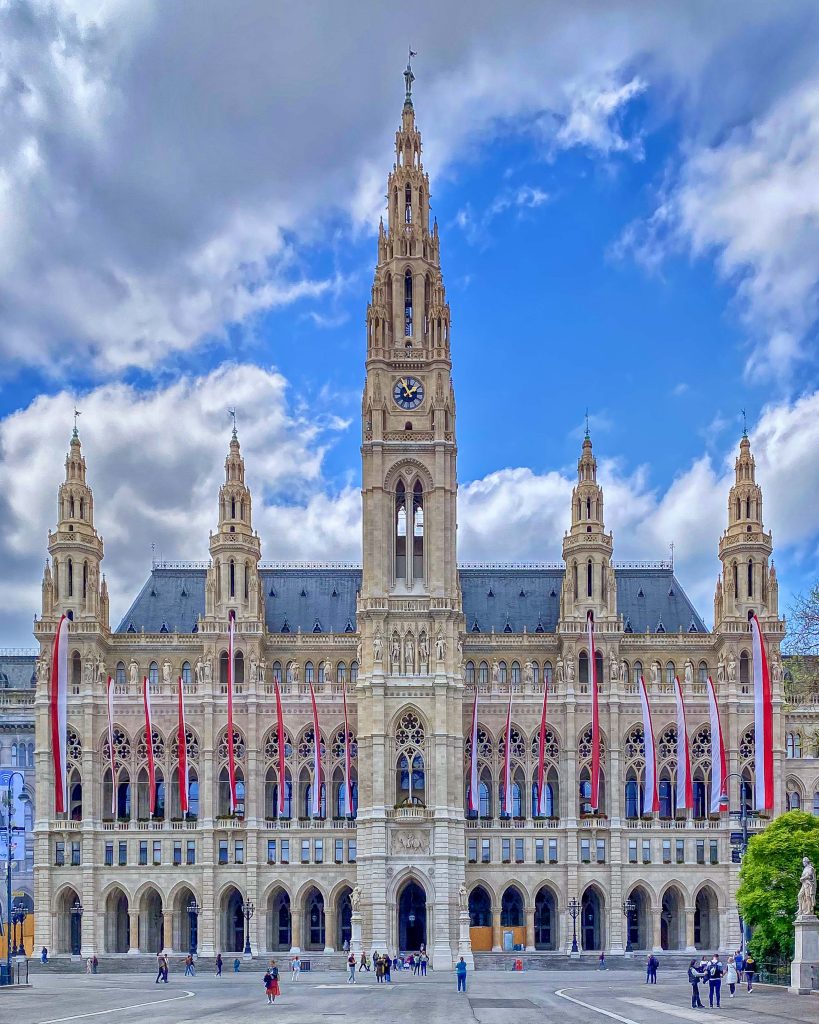
The City Hall on Vienna’s Ringstrasse in the historicist neo-Gothic style was completed in 1883 after 11 years of construction according to the plans of Friedrich von Schmidt. The location is due to the initiative of the Viennese mayor Cajetan Felder, who rejected the originally planned building site opposite today’s Stadtpark and was finally able to convince Emperor Franz Josef I. to build on the former parade ground.

The monumental building, modeled on Flemish Gothic town halls, bears a multitude of reliefs, statues of historical figures, artists, representatives of civic professions, citizen soldiers and shield bearers with the coats of arms of the suburbs, both inside and out. The building is crowned by a 5.4 m high and 1.8 t heavy town hall man in the form of a standard bearer, which is placed on the 98 m high main tower.

The building, which was severely damaged during WWII, was then renovated until the 1970s, the last general renovation taking place in 2012-2014. In addition to the mayor, the municipal council, the city senate, the provincial government and various municipal departments, including the director of the magistrate’s office, also reside in the building.

Minoritenkirche – The last supper

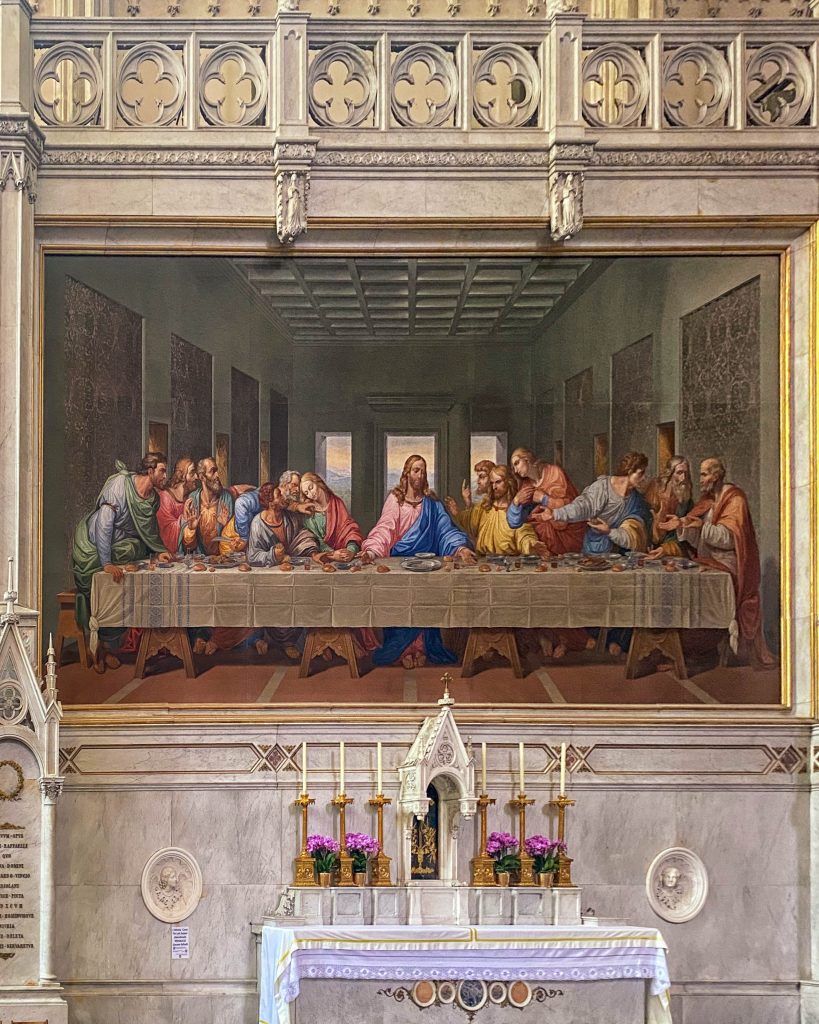
The Minoritenkirche (Friars Minor Conventual Church) in downtown Vienna, remarkable in many respects, houses a replica of Leonardo da Vinci’s „The Last Supper,“ probably the world’s most famous wall fresco, made by the Roman mosaic artist Giacomo Raffaelli starting in 1805/06.

Originally commissioned by Napoleon Bonaparte for the Louvre Museum, the Roman mosaic was also intended to serve as a safeguard for the original, already in poor condition, in the refectory of the Dominican monastery of Santa Maria delle Grazie in Milan from 1497.

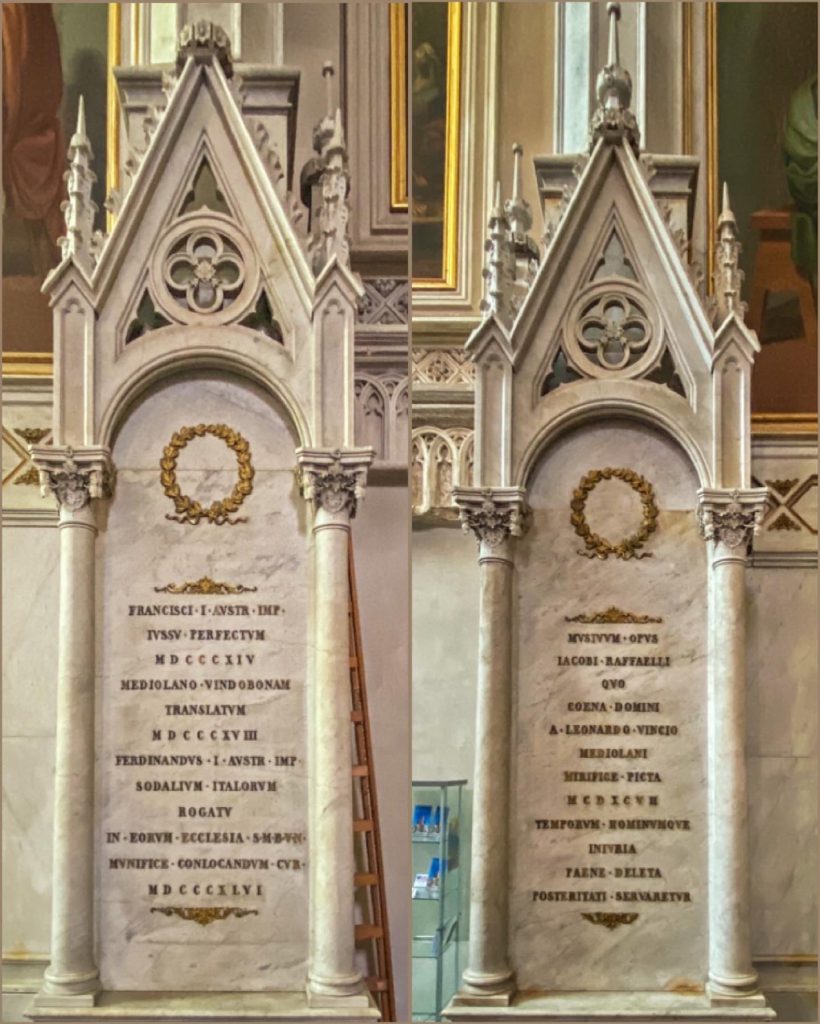
After the fall of Napoleon, Emperor Franz II/I originally purchased the 9.2×4.5m work for the Belvedere. Due to its size, it was installed in the Minorite Church above the Cenacolo side altar and inaugurated in 1847. The world’s largest reproduction of the 20-ton mural on twelve 24cm thick stone slabs between 2 inscriptions captivates to this day by the detailed execution and high artistic quality.

Theseus Temple in Volksgarten

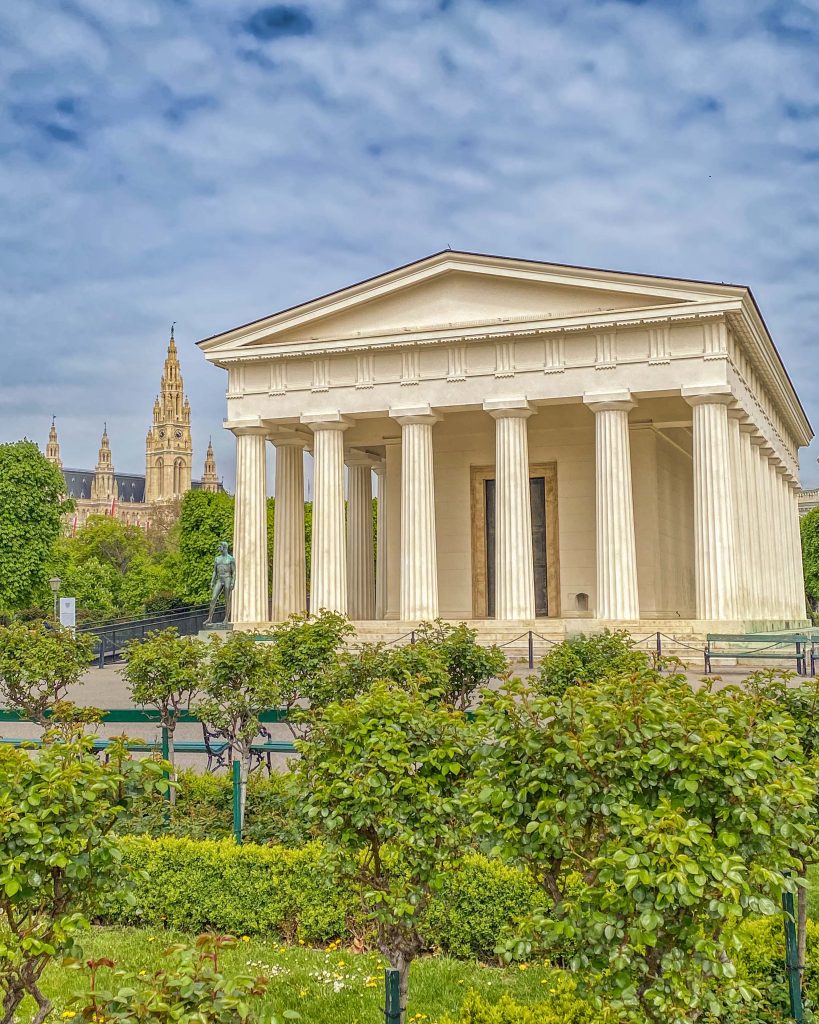
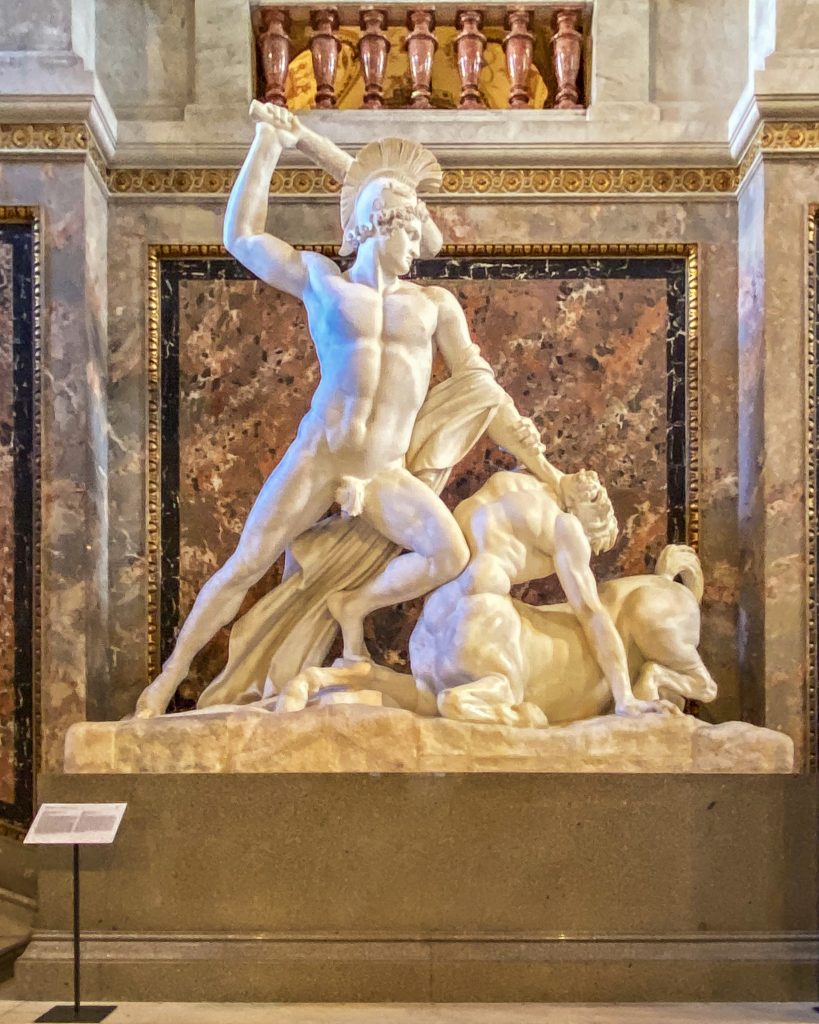
In the center of the Volksgarten on Vienna’s Ringstrasse, the Swiss-Austrian court architect Peter von Nobile built the approximately 14x25m large classical Theseus Temple in 1823. The crypt of the building, which was planned in the type of a ring hall temple (peripteros) with 6×10 columns, was to serve as a place for the sculptures of the imperial collection of antiquities, especially for the Theseus group designed by Antonio Canova.

Due to the construction on the area of the former moat, the foundations of the catacombs had to reach deep down, but soon proved to be too wet, so that the sculptures were later taken away. Today, the Theseus figure is located in the intermediate landing of the main staircase in the Kunsthistorisches Museum.

After extensive renovation in the 2000s, the temple now serves as an exhibition space and can also be accessed barrier-free. The bronze figure of a youthful athlete by Josef Müllner placed in front of it was ceremoniously unveiled in 1923 and was considered a sign of life for Austrian sports.

Zum goldenen Becher

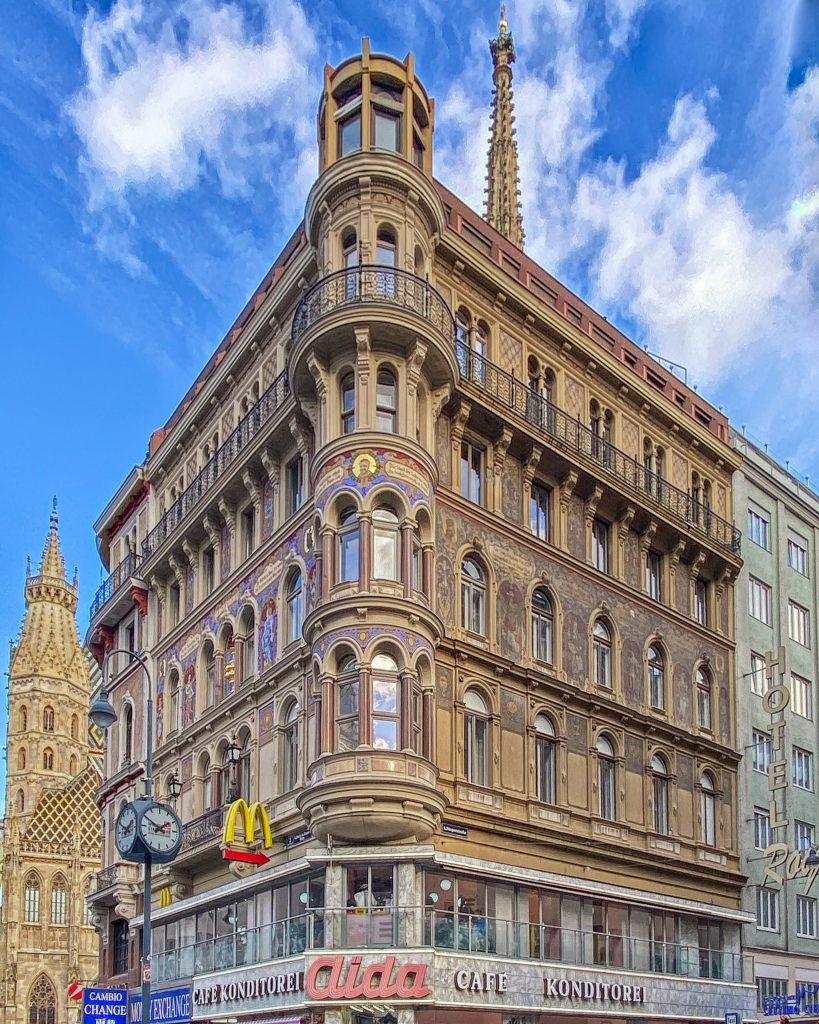
On Stock-im-Eisen-Platz, directly next to St. Stephen’s Cathedral, there is today the house „Zum goldenen Becher“ from 1883, built according to the plans of the Austrian Arch. Alexander Wielemans of Monteforte in the late historicist style. Wielemans was also responsible for the Palace of Justice in Vienna and the City Hall in Graz.

The name of the residential and commercial building in old German forms derives from a house sign of the previous building, a wrought iron grille with a cup, located above the front gate. The background for this was possibly the Corpus Christi procession in 1549, during which a Protestant baker’s boy named Johann Hayn is said to have snatched the monstrance from the priest and was then burned as punishment. The reigning king and later emperor Ferdinand I would have had a column with a monstrance erected at the site.

Despite damages during WWII, rich facade paintings with allegorical figures, portraits of emperors and verses on the history of the house and the city can still be seen between the round-arched windows, an embellished floor with a lattice balcony on consoles and partly also Ionic red marble columns.

Adlergarnitur

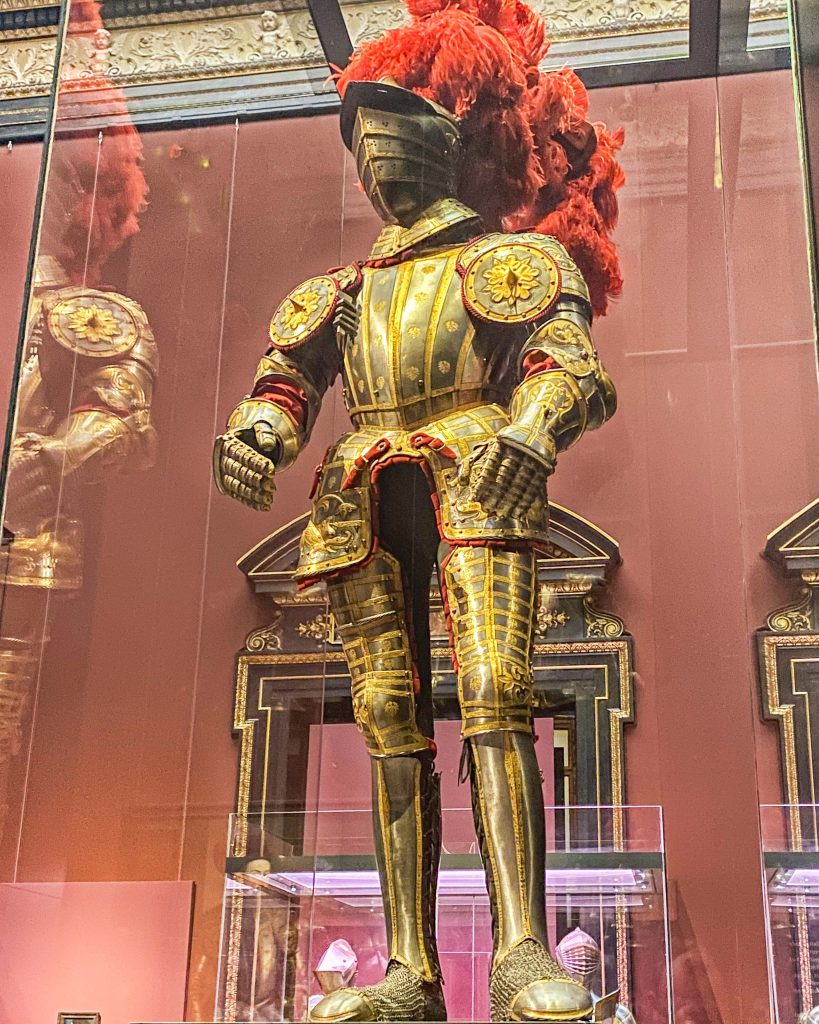
One of the showpieces of the excellent Hofjagd- und Rüstkammer in the Hofburg is undoubtedly the so-called „Adlergarnitur“ from 1547, which the later Emperor Ferdinand I had made for his son, Archduke Ferdinand II of Tyrol. The name derives from the gilded eagles decorated on the surface, the heraldic animals of old Austria.

The knightly luxury armor, which was usually worn for representation purposes at tournaments, consists of 87 individual parts that can be combined as a modular system to 12 different armors for different occasions (on horseback, on foot, for field, tournament, foot combat, etc..). The „sporting equipment“, elegant due to its excellent execution and decoration, was created by the Innsbruck plater Jörg Seusenhofer.

To produce it, iron was fire-gilded, framed in black, engraved and rivet heads were made of brass. The considerable cost was equivalent to 12 years‘ salary of a high court official. The field armor is the largest preserved of its kind and, through illustration in the inventory of Archduke Ferdinand II, also the best documented.

Theater Ronacher

The Theater Ronacher of 1872 was originally planned by Ferdinand Fellner & Sohn for the German theater director Heinrich Laube. After 20 years of successful management of the Burgtheater, Laube was rudely replaced and, together with the publisher of the „Neue Wiener Presse“ Max Friedländer, decided to build a privately financed rival theater to the Burg. This developed into a legendary duel between the houses, which was abruptly interrupted by a fire 12 years later.

The theater entrepreneur Anton Ronacher had the ruins rebuilt by the theater architects Fellner and Helmer in 1888 as the „Konzert- und Ballhaus Ronacher“. The building, which was repeatedly adapted, was used after WWII as an alternative stage for the castle, then later for TV productions and, after 10 years of vacancy, was expanded by the Vereinigen Bühnen Wien as a musical stage with more than 1,000 seats.

After a general renovation, in the 2000s there was still a controversial roof extension of the on 3 sides free-standing theater building in historicism with temple facade by Arch. Günter Domenig.

Emperor Franz Monument in the Burggarten

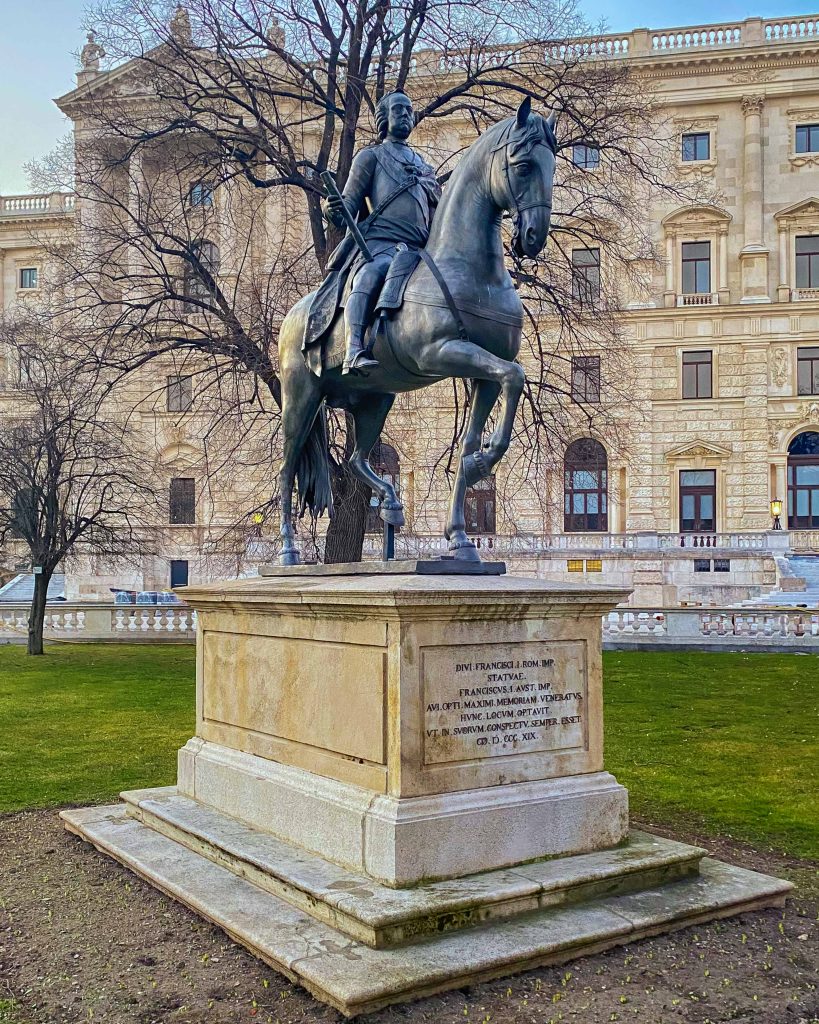
The Emperor Franz Monument in the Burggarten in classicist forms depicts Franz I Stephen of Lorraine, husband of Maria Theresa and as Franz I Roman-German Emperor from 1745-1765 on horseback. Vienna’s first equestrian statue was begun by Balthasar Ferdinand Moll during the emperor’s lifetime and completed in 1781 in cast lead.

However, the court did not purchase the monument and the sculptor left it to his family. In 1797 it was placed in the Paradeisgartel on the Bastei and in 1819 it was transferred to the former „Kaisergarten“. Moll, who came from Tyrol, is still known today, especially for the production of the 20 or so magnificent coffins in the Capuchin crypt.

Franz Stephan was a financial genius; in 1763 he was entrusted with the supreme management of finances and the reorganization of the national debt. Open to all modern trends (and to women) he invested in industrial settlements and mining), he devoted himself to collecting for his natural history cabinet (which became the Natural History Museum) and to acquiring a large private fortune.

Columned hall in Austrian parliament

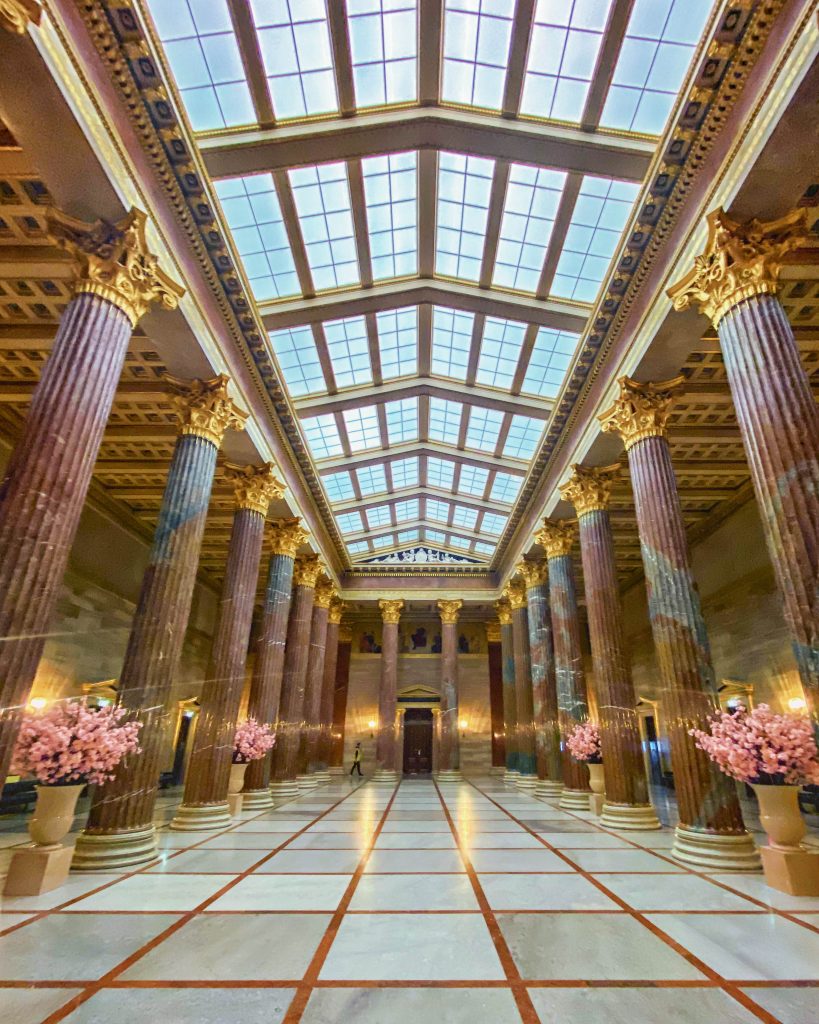
The centerpiece of the Parliament, which was completed in 1871 (and has now been completely renovated) is the main work of the outstanding architect Theophil Hansen, is the monumental portico. In the style of an ancient peristyle with a glass gabled roof, supported by 24 monolithic columns of Salzburg marble, this space was also intended to function as the social center of the building. A meeting place for exchanges between the different chambers of the Imperial Council of the time.

The renovated floor of Karst marble slabs covers 40×23 meters. In the course of WWII there was severe damages after which 2 columns were replaced. The frescoes, which were painted by the Austrian painter Eduard Lebiedzki in a historicist style, are only preserved in fragments.

You can also see the pediment groups „Vaterlandsliebe“ (Patriotism) by Hugo Haerdtl and „Einigkeit“ (Unity) by Karl Sterre and between the columns there are figures of Roman statesmen.

Exhibition „The Fest“ at the MAK

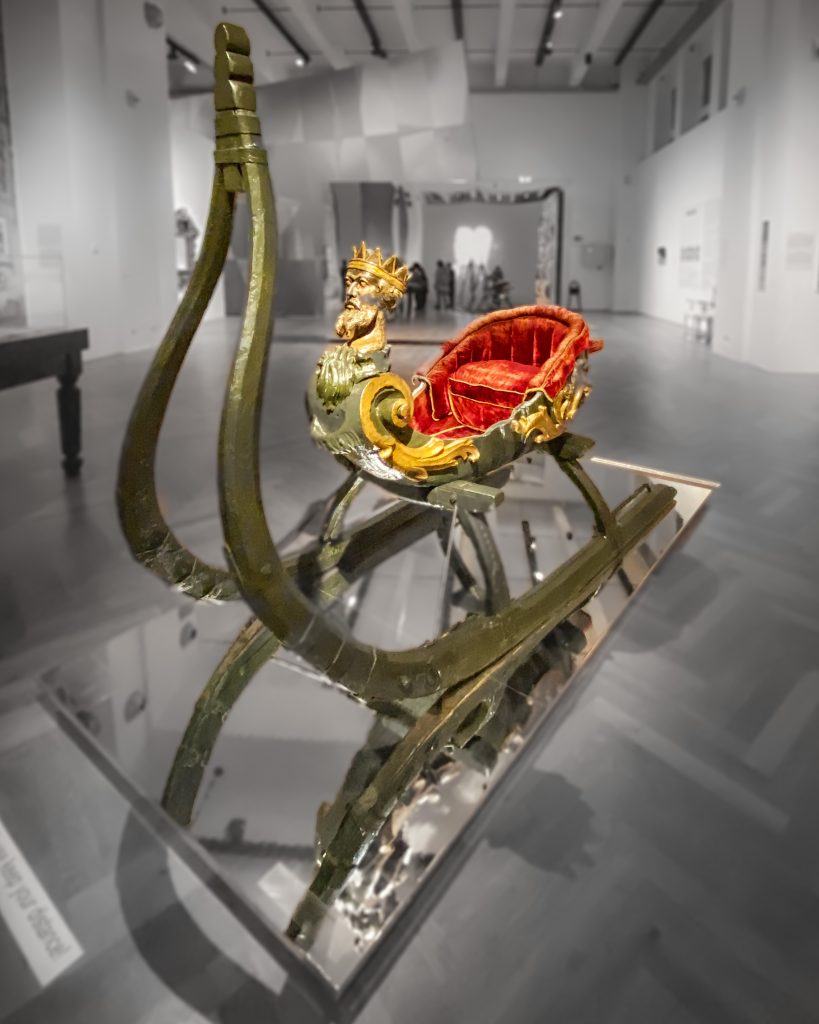
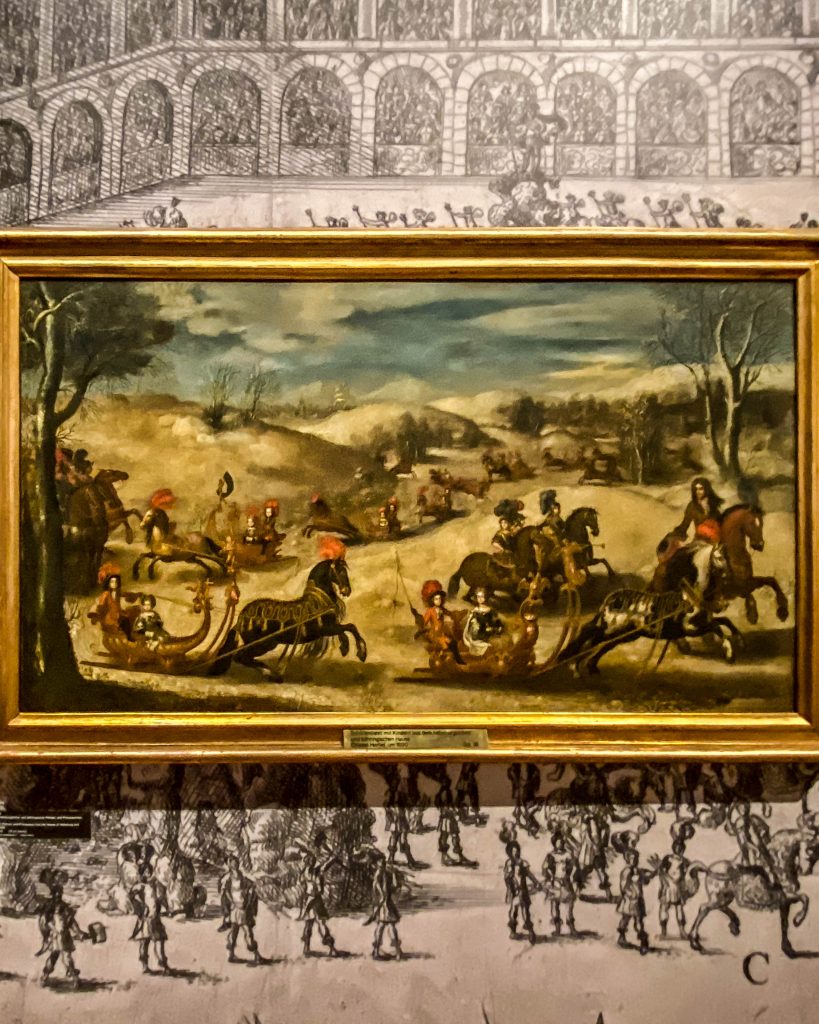
As part of the current exhibition „The Fest“ at the Museum of Applied Arts (MAK), a form of courtly merrymaking and representation that has been popular since the Middle Ages is shown in the form of „schlittage“.

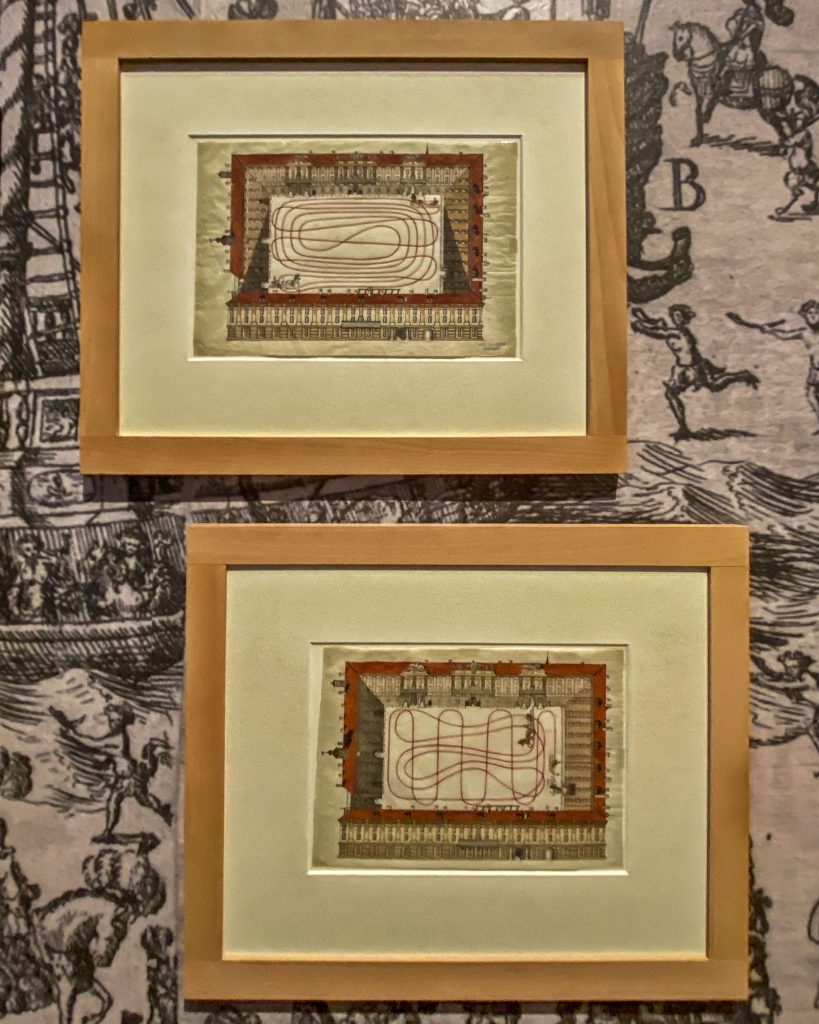
These were elaborately choreographed sleigh rides in groups, accompanied by music and the ringing of bells, in which horse-drawn sleighs, manned by a cavalier and a lady assigned to him, moved along predetermined serpentine lines and routes.

The sledges were elaborately designed and, if necessary, snow was brought from the surrounding countryside of the city. Events took place partly at night with torches, e.g. at the Hofburg, and partly during the day with a ride to Schönbrunn followed by a banquet or spectacle.

I am happy to offer a guided visit to the exhibition as part of a tour of the highlights of the MAK!

Tomb of Emporer Frederick III

The red marble tomb of Emperor Frederick III in the apostle nave of the Cathedral Church of St. Stephen from 1517 is one of the greatest works of late Gothic sculpture. The top plate, weighing 8 tons and created by the Dutch sculptor Niclas Gerhaert van Leyden, shows the figure of the reclining Frederick; the sides and the surrounding balustrade of the sarcophagus are adorned with coats of arms, statues of princes and apostles, and reliefs of endowments of the first Habsburg to be crowned emperor.

That it is indeed a sarcophagus was clearly proven in an investigation presented in 2019. The ruler, known for his motto A.E.I.O.U., died in 1493 at the biblical age of almost 78 for those times and was reburied after completion.

The extensive figurine program of the sculpture, which can be visited during guided tours, shows among other things grimaces, mythical creatures, animals and skulls, which probably also symbolize the sinfulness in life. Monks and priests pray for his salvation, on the east side in the direction of view is emblazoned with an image of the Risen Christ.

Cookie Consent mit Real Cookie Banner