J. & L. Lobmeyr

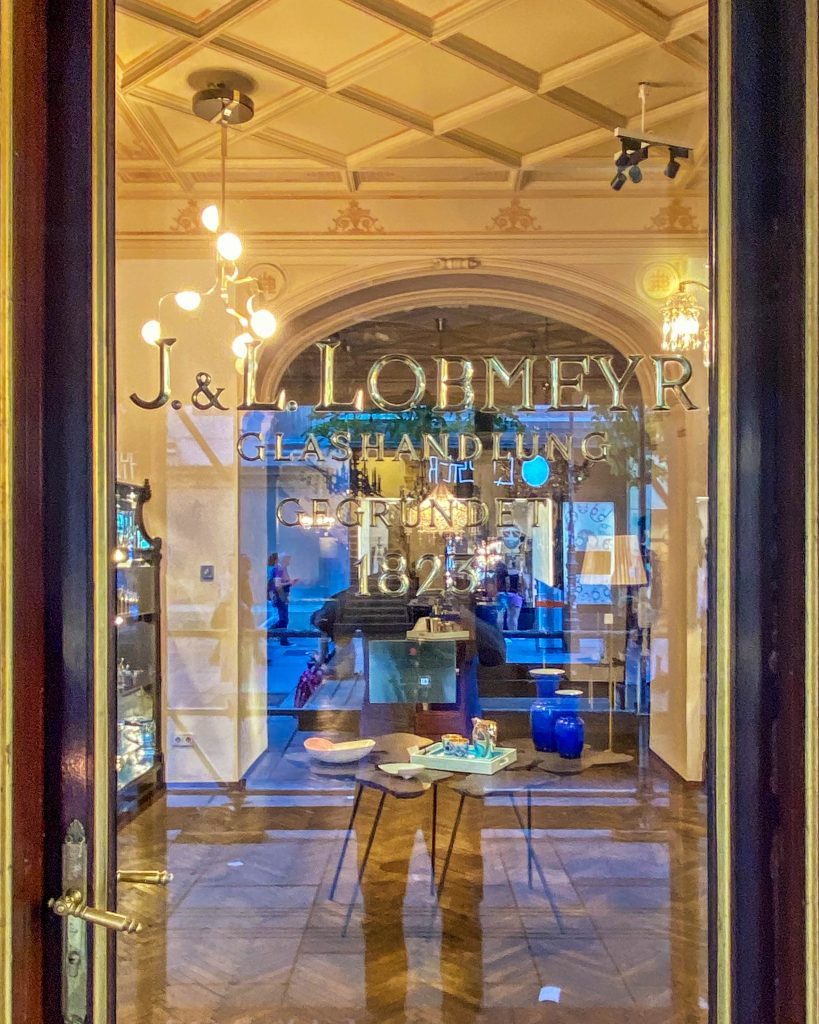
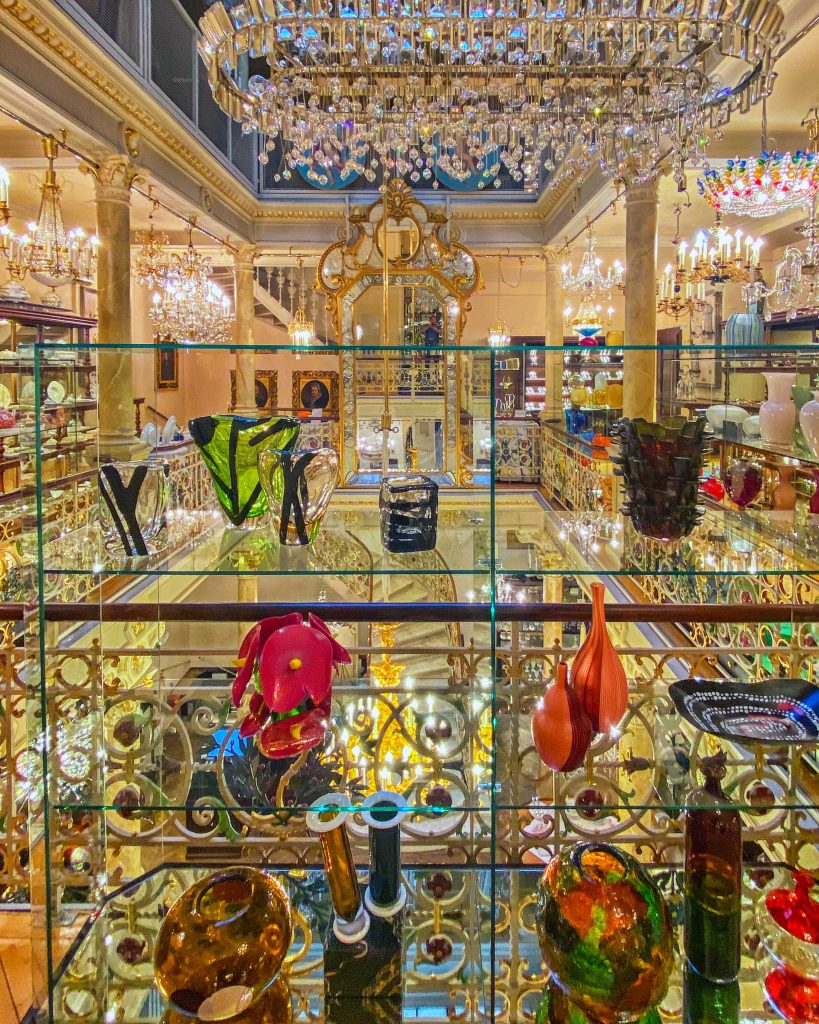
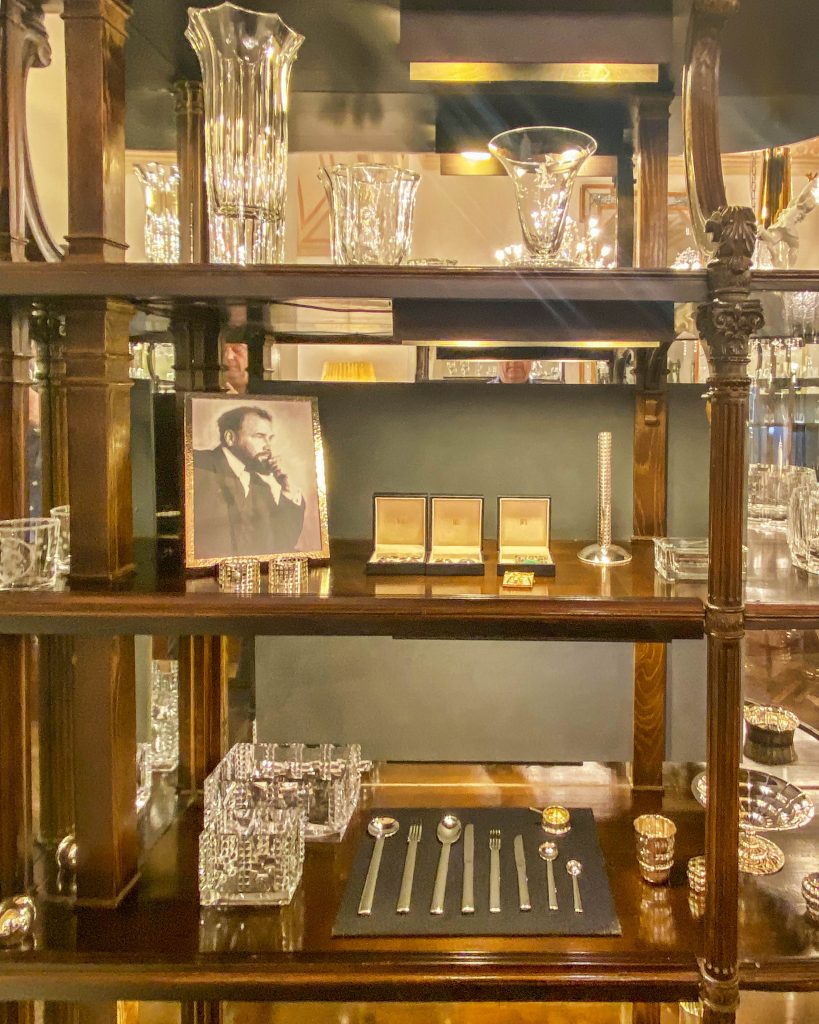
As early as 1823, Joseph Lobmeyr founded a glass manufacturing company and settled in Kärntner Straße in the 1st district. From the 1860s, the manufacturer of cut and engraved glass was then also allowed to bear the seal of quality „k.u.k. Hofglaser und Hofglashändler“ and the family devoted itself to supporting avant-garde artists, who are still omnipresent in the showroom and glass museum of the store.

Participation in world exhibitions, various arts and crafts and museum exhibitions (including the MAK) and also the establishment of a workshop for the production of contemporary lighting fixtures, also brought international attention. The chandeliers in the Metropolitan Opera in New York for example come from the traditional Viennese company, which also operates glass studios in Stoob (Bgld) and Baden (NÖ).

On request, members of the sixth generation of the family also give guided tours of the extensive and exclusive Wiener Werkstätte collection and teach glassmaking techniques, followed by tastings from Lobmayr glasses.

Stallburg

The Stallburg in Vienna was built in the 16th century by order of Emperor Maximilian II by the Italian architect Pietro Ferraboscu in the Renaissance style as part of the Hofburg. The stables, built on the ground floor of the residence according to the Spanish model for the emperor’s personal horses, are still used today by the Spanish Riding School. In winter, the Lipizzaner horses – in addition to daily training and performances in the Winter Riding School opposite – also warm up in the unheated stables, alternately under heat lamps.


The flying Lipizzaner of the artists of Artforart consists mainly of styrofoam and comes to a weight of about 500kg, for the festive sparkle provides a coating with crystals.

St. Stephan Cross South Tower

On 10.10.1433, Hans von Prachatitz, Bohemian-Austrian architect and master builder of St. Stephen’s Cathedral, placed the two-armed cross on the top of the Gothic south tower. At that time, St. Stephen’s Tower was the second largest church tower in Europe after Strasbourg. The square base of the tower gradually tapers to an octagon at the top through ever-widening slopes. From the small pedestal grows a four-part finial and the double-headed eagle with the inscription „Viribus Unitis“ – the motto of Emperor Franz Josef I.

Monument Karl Renner

Karl Renner stood as State Chancellor at the cradle of the First and Second Republics, and from 1945-1950 he then was also the first Federal President of the Second Republic. The portrait head of Alfred Hrdlicka in the City Hall Park in Vienna stands in the center of a stone podium made of green labrador surrounded by a six-meter-high steel frame construction. For this reason, the monument earned derision from the Viennese, who said that the „chancellor was trapped in a birdcage.“


On closer inspection, it is noticeable that the bust is not in the center, but is slightly shifted toward Parliament and the Ring. Renner’s recommendation in March 1938 to vote for the annexation of Hitler’s Germany allegedly prompted Hridlicka to create this asymmetrical design.

Cookie Consent mit Real Cookie Banner